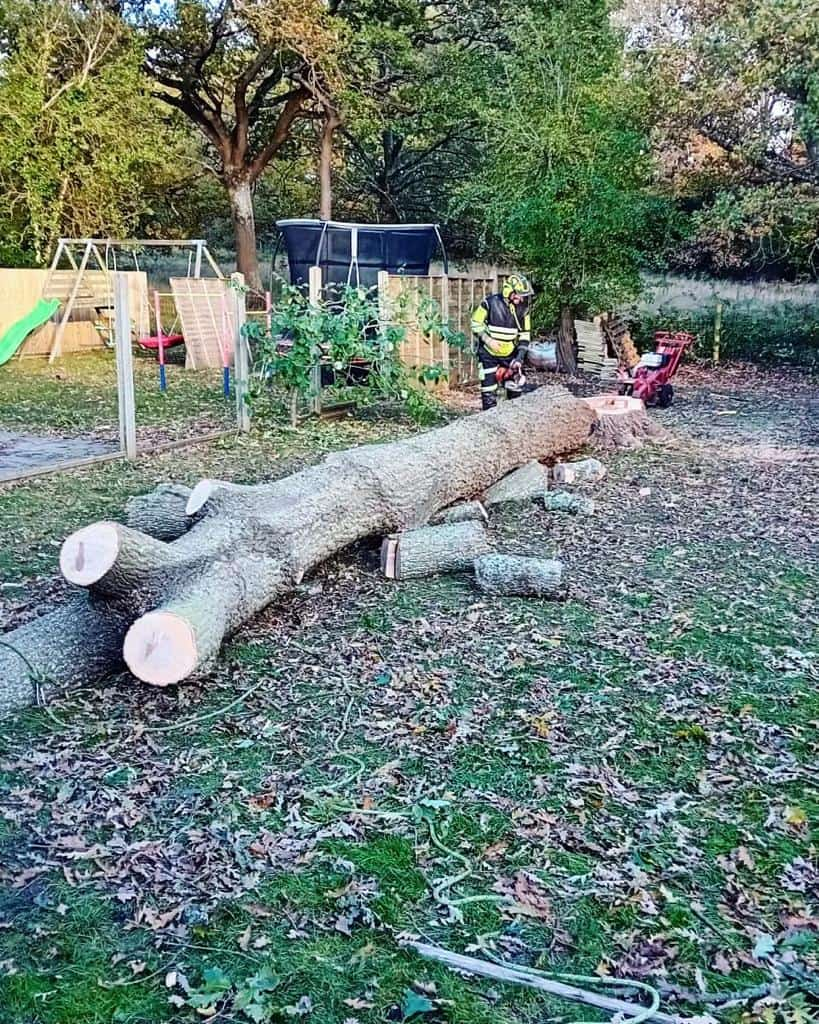
Installing new fencing can significantly improve the appearance and practicality of a garden, but the condition of nearby trees and hedges deserves consideration before the fencing work begins. Established vegetation can occupy the proposed fence line, restrict access and continue growing into the new structure after installation.
This does not mean every tree or hedge close to a proposed fence needs heavy cutting or removal. In many cases, selective pruning, hedge cutting or management of specific branches can create the necessary working space while retaining healthy vegetation. The important point is to assess what is growing around the intended fence line before it becomes an obstacle.
For property owners in Mildenhall, Suffolk, arranging appropriate tree surgery or hedge management before fencing is installed can make the overall project easier to plan. It can also reduce the likelihood of having to carry out awkward pruning immediately after a new fence has been completed.
Why Should Trees and Hedges Be Considered Before New Fencing Is Installed?
Trees and hedges continually change in size. A branch that currently sits clear of a proposed fence may extend further over time, while an unmanaged hedge can quickly occupy considerably more width than expected. Existing growth can also make it difficult to access the exact area where fencing is intended.
Assessing vegetation beforehand allows unnecessary growth to be managed while access remains relatively straightforward. It also gives homeowners an opportunity to decide which trees and hedges should remain prominent features of the finished garden.
The objective is not to remove vegetation simply to make fencing easier. It is to coordinate both elements so that the new boundary and existing planting can work together more successfully.
Overgrown Hedges Can Hide the True Fence Line
A mature hedge can spread well beyond the position of its main stems.
Dense side growth may make it difficult to see the available working space or understand how much room exists for a new fence. Once the hedge is appropriately cut back, the relationship between the vegetation and proposed installation can become much clearer.
Managing excessive growth before fencing begins can therefore make planning considerably more straightforward.
Hedge Width Can Become a Long-Term Issue
Height often receives the most attention when hedges become overgrown, but width is particularly important beside fencing.
If a hedge already extends heavily into the intended fence position, installing a structure tightly against the foliage may create an awkward arrangement. Continued growth can then make future hedge maintenance more difficult.
Appropriate side reduction can help create a more manageable relationship between hedge and fence.
Future Hedge Growth Should Be Considered
A freshly cut hedge will not remain at exactly the same dimensions.
New shoots will continue developing, so enough thought should be given to how the hedge is likely to grow after the fence is installed. Positioning everything around the hedge’s appearance immediately after cutting may not account for its future maintenance requirements.
Professional hedge management can help establish a more practical size before the new boundary is completed.
Access for Future Hedge Cutting Matters
A new fence can change how easily a hedge can be maintained.
If vegetation is positioned extremely close to the structure, reaching certain sections later may become difficult. This can lead to uneven growth or make routine maintenance unnecessarily awkward.
Considering future access before installation helps prevent a situation where the new fence immediately restricts the care of an established hedge.
Heavy Growth Can Push Against Fence Panels
Dense branches and hedge growth can gradually come into contact with fencing.
Continued pressure may affect the way the boundary looks and can make both the vegetation and fence harder to maintain. Wind can also move branches repeatedly against the structure.
Creating suitable clearance before installation reduces immediate contact and gives new growth room to be managed.
Branches Over the Proposed Fence Line May Need Attention
Trees positioned near boundaries can develop branches extending directly across the area where fencing is planned.
Not every overhanging branch needs removing. However, particularly low, damaged or poorly positioned growth may interfere with installation or create ongoing maintenance problems.
Selective pruning can target these specific branches without unnecessarily reducing the rest of the tree.
Low Branches Can Restrict Working Space
Tree branches do not need to touch the proposed fence to complicate installation.
Low growth can restrict access to the working area and make it more difficult to move along the intended boundary. Where appropriate, selected branches may be pruned to create useful clearance.
This can be particularly helpful when the tree itself is otherwise suitable to remain unchanged.
Selective Pruning Can Be Better Than Reducing the Whole Tree
If only one part of a tree conflicts with the proposed fencing, there may be little reason to alter the complete crown.
A professional tree surgeon can identify whether individual branches can be reduced or removed while retaining suitable surrounding growth. This produces a more proportionate outcome than carrying out unnecessary work across the entire tree.
The pruning should address the actual conflict rather than simply making the tree smaller.
Tree Condition Should Be Assessed Before Fencing Work
The planning stage can also be a useful opportunity to look at the general condition of nearby trees.
Dead, damaged or structurally unsuitable branches may deserve attention independently of the fencing project. Dealing with appropriate tree work beforehand can be considerably easier while the area beneath and around the tree remains accessible.
The new fence can then be installed after the necessary vegetation management has been completed.
Dead Branches Can Be Easier to Manage Before Installation
Where significant deadwood is positioned above the intended fence line, carrying out suitable work beforehand can avoid unnecessary complications later.
Once new panels, posts or other garden features occupy the area below, access may become more restricted. The tree work itself may also require greater care around the newly completed structure.
Planning the sequence of work can therefore be beneficial.
Damaged Branches Should Not Simply Be Built Around
If a branch is visibly damaged, designing the fence around its current position may not provide a sensible long-term arrangement.
The branch’s condition should first be assessed to determine whether pruning is appropriate. Once necessary tree work has been completed, the fencing can be planned around the remaining healthy structure.
This avoids allowing a temporary tree defect to dictate the permanent garden layout.
Tree Size Does Not Automatically Mean It Needs Reducing
A mature tree close to a new fence may look imposing, but its size alone is not necessarily a reason for pruning.
If the crown has suitable clearance and does not interfere with the proposed work, extensive reduction may provide little practical benefit. Tree surgery should be carried out for a clear reason rather than simply because fencing is being installed nearby.
A professional assessment can help identify whether any work is genuinely necessary.
Existing Stumps Can Obstruct Fence Installation
Previous tree removal can leave behind another potential obstacle: the stump.
A stump positioned close to the intended boundary may interfere with how the area can be prepared and used. Even when the visible timber is relatively low, the main stump can remain substantial below the surface.
Professional stump grinding may be worth considering before fencing work begins if the stump is occupying useful space.
Surface Roots Can Affect the Available Working Area
Established trees can have significant roots close to the surface.
These may influence how straightforward it is to work in a particular section of the garden. Unlike ordinary vegetation, roots should not simply be cut indiscriminately to make space.
Where tree roots are relevant to the planned work, the relationship between the tree and proposed layout deserves careful consideration.
Stump Grinding Can Create a Clearer Area
Where an unwanted stump is directly obstructing the intended garden layout, grinding can reduce the main timber below ground level.
This can make the immediate area easier to incorporate into subsequent improvements without attempting to excavate the entire former root system.
The required work depends on the stump’s position, size and how the surrounding area will be used afterwards.
Cutting Hedges Before Fencing Can Improve Visibility
Dense vegetation can make it surprisingly difficult to understand the shape and levels of the ground beneath it.
Once excessive hedge growth is appropriately managed, the working area becomes easier to inspect. This can reveal hidden stumps, uneven sections and other features that were previously concealed.
Better visibility can make coordination between tree or hedge work and subsequent garden improvements more effective.
Severe Hedge Cutting Is Not Always Necessary
Preparing for new fencing does not mean a hedge needs to be drastically reduced.
Often the practical requirement is simply to create sufficient clearance around the relevant side or section. Depending on the hedge species and condition, measured trimming can be preferable to excessive cutting.
The aim should be to manage the vegetation while retaining its value within the garden.
Hedge Condition Influences How It Should Be Managed
An established hedge may contain dense healthy growth, sparse sections, dead stems or evidence of previous heavy cutting.
These characteristics affect how it can reasonably be reduced. Cutting every hedge back to the same dimensions without considering its condition may produce an unsuitable result.
Professional hedge cutting takes the existing structure and future growth into account.
Managing Vegetation First Can Avoid Awkward Work Later
The sequence in which garden improvements are carried out can make a considerable difference.
Tree pruning and hedge cutting are generally easier when there is sufficient working space around the vegetation. Installing fencing first can create a new obstacle that has to be protected or worked around during subsequent tree surgery.
Where vegetation clearly requires attention, dealing with it beforehand can be the more practical approach.
New Fencing Should Not Become an Obstacle to Immediate Tree Work
It can be frustrating to complete a new boundary and then discover that a nearby tree requires pruning almost immediately.
The work may still be entirely possible, but access can become more restricted and additional care may be needed around the newly installed structure.
Assessing established trees during the planning stage can help identify obvious maintenance requirements in advance.
Regular Hedge Management Can Protect the Finished Layout
Once fencing has been installed, ongoing hedge management becomes important.
Allowing vegetation to grow unchecked can gradually recreate the same lack of clearance that existed before installation. Periodic cutting can help maintain a practical separation between the hedge and boundary.
This is usually easier than waiting until several seasons of growth have created another heavily overgrown section.
Young Trees Should Be Considered for Their Future Size
A relatively small tree near a proposed fence may not create any immediate difficulty.
However, trees can change considerably as they mature. Crown spread, trunk size and branch dimensions should be considered in terms of future development rather than only current appearance.
Where pruning is appropriate, the objective should still be sensible tree management rather than attempting to prevent normal growth entirely.
An Established Tree Can Still Work Well Beside New Fencing
Trees and fencing do not necessarily conflict.
With appropriate planning, an established tree can remain a prominent garden feature while the new fence provides the required boundary. Selective tree surgery can sometimes create enough clearance without significantly altering the tree.
This is often preferable to assuming vegetation must be removed simply because the garden is changing.
Hedges Can Also Remain Valuable Boundary Features
Some gardens use both hedging and fencing within the same boundary area.
The hedge can provide greenery and visual depth while the fence creates a defined structure behind or alongside it. The success of this arrangement depends on allowing enough room for the hedge to be maintained.
Managing its size before installation can make that relationship easier to sustain.
Tree Felling Should Not Be the Default Solution
A tree close to planned fencing does not automatically need removing.
Where selective pruning can create suitable clearance and the tree remains appropriate for its position, felling may be unnecessary. The same principle applies to established hedges that can be managed rather than removed.
Tree surgery should aim for the least intervention reasonably required to achieve the intended result.
Professional Assessment Can Help Before the Garden Changes
It is often easier to assess vegetation before other work alters access around it.
A tree surgeon can examine nearby branches, hedge growth, existing stumps and the general relationship between vegetation and the intended fence line. This helps identify what should be addressed now and what can simply continue to be maintained normally.
The result is a more coordinated approach to the garden rather than treating each element independently.
Why Professional Tree and Hedge Management Adds Value
Preparing for new fencing requires more than simply cutting back everything close to the proposed boundary.
At Mildenhall Tree Surgeons, we can assess trees, hedges and unwanted stumps in relation to how the surrounding garden is intended to change. Where pruning or hedge cutting is appropriate, the work can focus on creating practical clearance while retaining healthy vegetation wherever suitable.
For gardens in Mildenhall, Suffolk, carrying out appropriate tree surgery before fencing installation can help create a clearer working area and a more manageable relationship between established vegetation and the finished boundary.
Good Planning Can Reduce Future Maintenance Problems
The best time to consider how trees and hedges will interact with new fencing is before the fence is installed.
Allowing appropriate space for future growth and maintenance can reduce repeated contact between vegetation and the structure. It can also make subsequent pruning and hedge cutting considerably easier.
A little planning at the beginning can therefore help both the vegetation and new garden layout work together more effectively.
Conclusion
Trees and hedges should be considered before new fencing is installed, particularly where branches, dense growth, surface roots or old stumps occupy the proposed working area. Appropriate management beforehand can improve access, create useful clearance and reduce the likelihood of immediate maintenance becoming necessary around a newly completed fence.
This does not mean vegetation should automatically be heavily reduced or removed. In many cases, selective tree pruning, measured hedge cutting or stump grinding can address the specific obstruction while retaining healthy and suitable garden features.
If you are planning new fencing in Mildenhall, Suffolk, and nearby trees, hedges or stumps may interfere with the project, contact Mildenhall Tree Surgeons. We can assess the vegetation and recommend appropriate tree surgery or hedge management to help prepare the area without carrying out unnecessary work.
Call us on: 01638 597 989
Click here to find out more about Mildenhall Tree Surgeons
Click here to complete our contact form and see how we can help with your tree care needs.